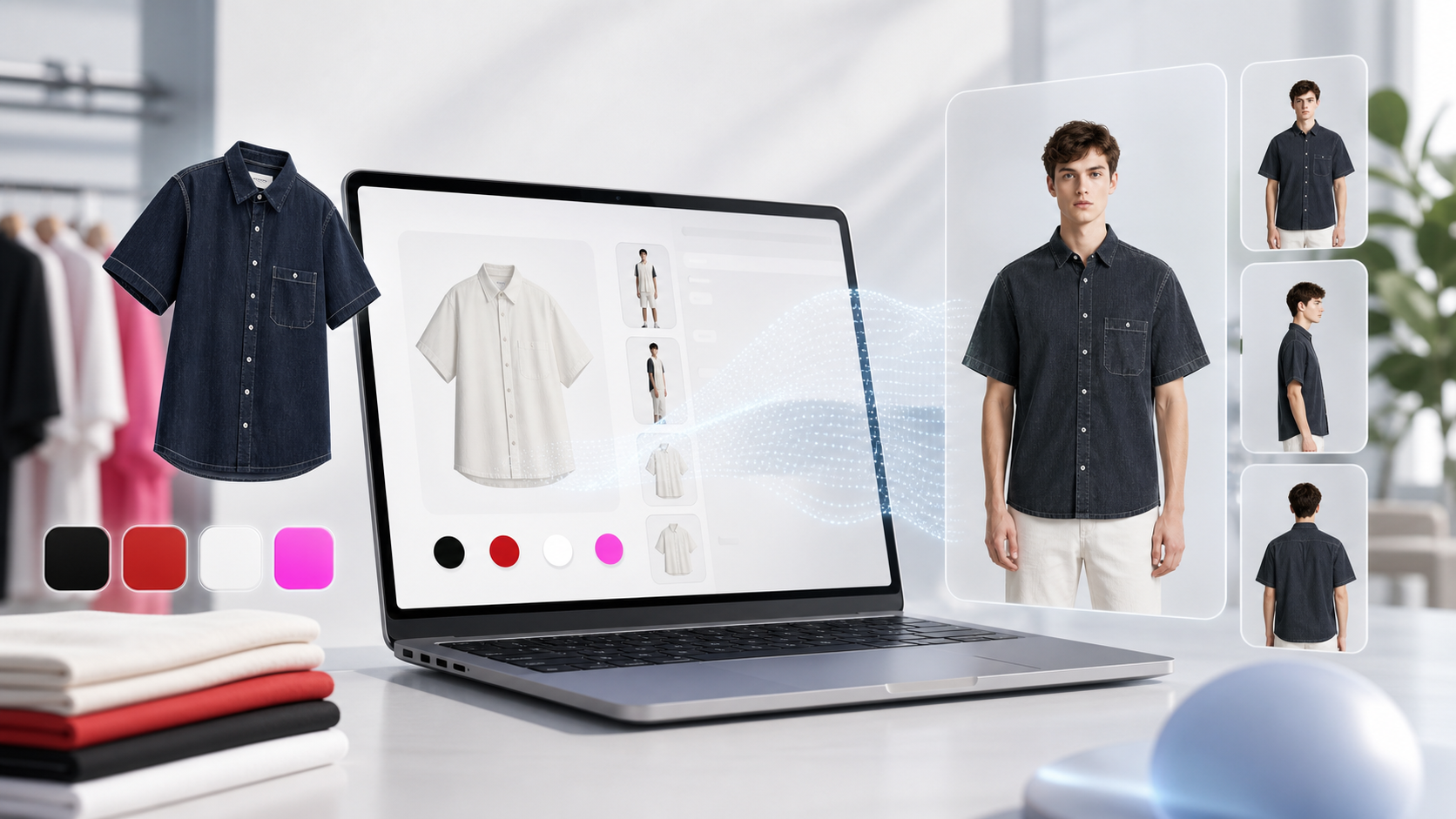
Buying clothes online is easy until the shopper has to decide. Will it fit? Will it look like the product photo? Will returning it be a hassle? Virtual try-on answers those questions earlier by showing a fitting preview before checkout.
Virtual try-on solves a confidence problem
Returns are not only a logistics cost. They are a sign that shoppers had to make a decision with incomplete information. NRF and Happy Returns projected 2024 retail returns at $890 billion, with retailers estimating that 16.9% of annual sales would be returned. In apparel, the issue becomes sharper. Coresight Research estimated a 24.4% online apparel return rate in the U.S.
The shopper is not the problem. The product page often asks them to imagine too much. A size chart can explain measurements. A review can mention fit. A product photo can show fabric. But none of those fully show how a garment may look when worn.
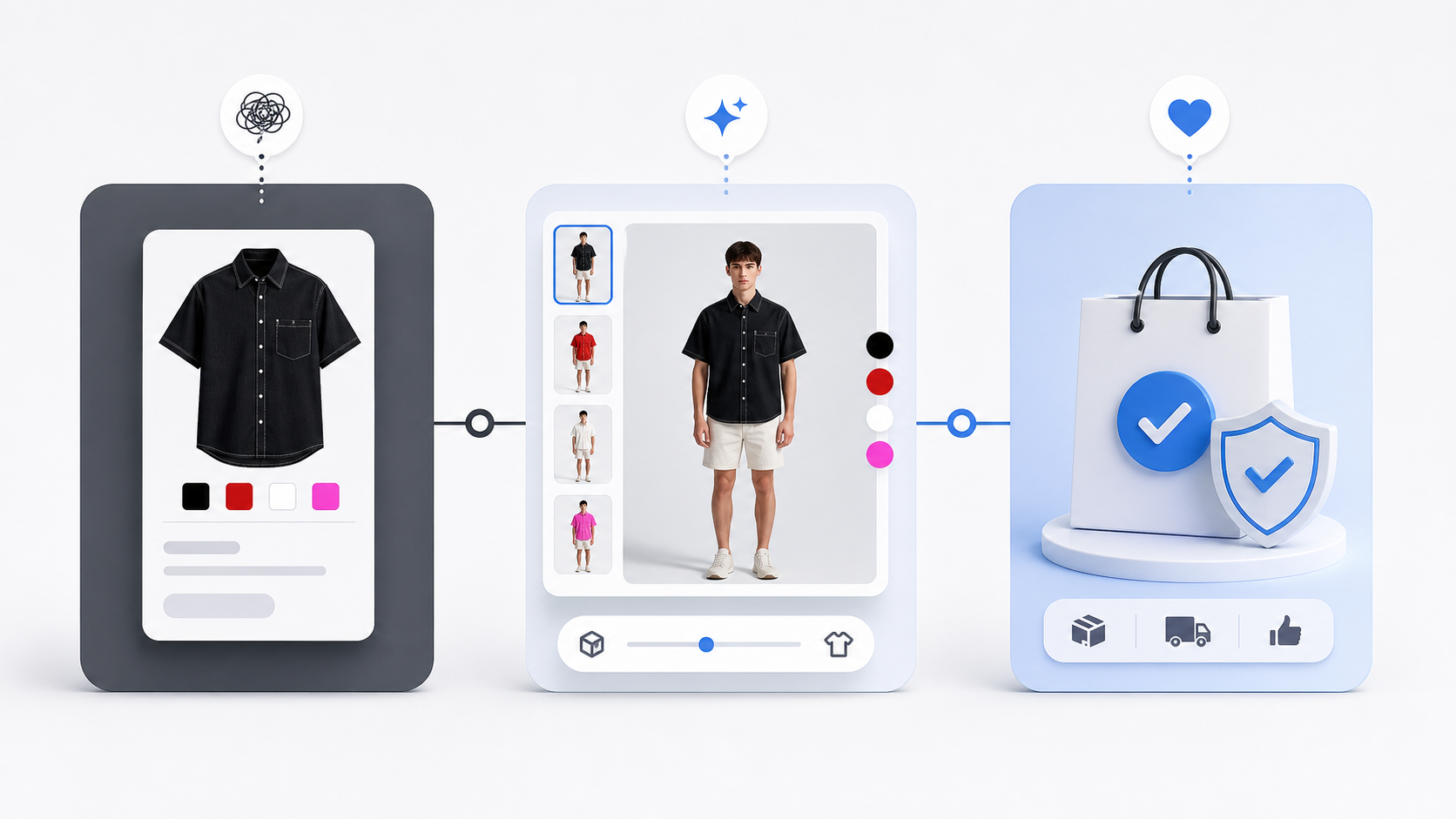
A good virtual try-on experience stays close to the buying flow
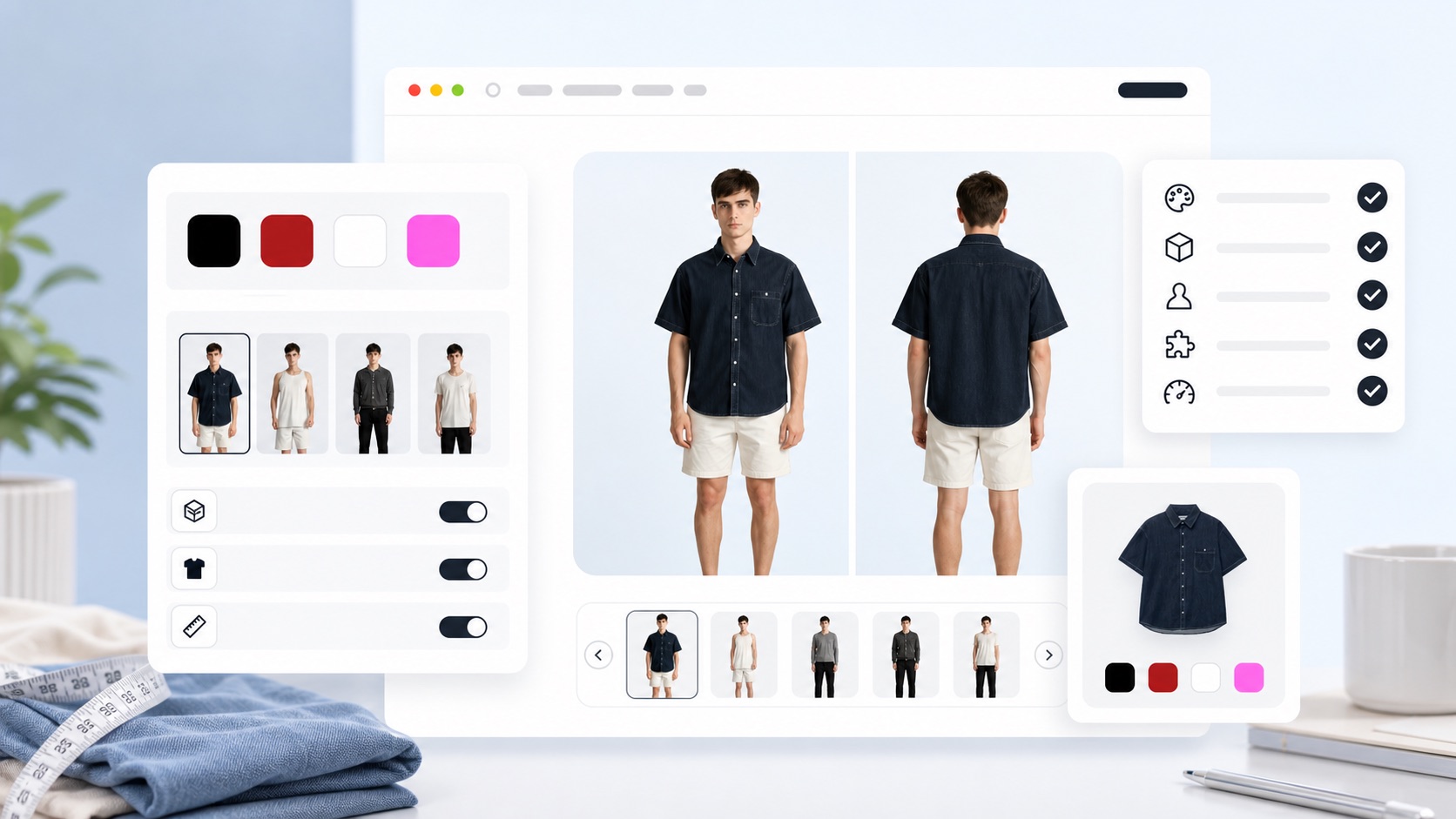
Baymard Institute notes that apparel shoppers need enough visual context to judge appearance, size, and fit. Human model images help because they show length, shape, and proportion. Virtual try-on builds on the same idea. It gives shoppers a fitting preview without sending them away from the product page.
- Let shoppers move from product photo to fitting preview in one step.
- Use default fitting models that match the store audience.
- Keep colors, buttons, and labels aligned with the store design system.
- Save try-on history so shoppers can compare looks before buying.
What should a brand check before adding AI fitting?
Start with image quality, model fit, page placement, and speed. The try-on button should appear where shoppers already compare product details. The result should help them decide, not distract them with a separate experience. Use clear labels. Tell shoppers what will happen when they click.
How ThatzFit approaches virtual try-on
ThatzFit brings AI fitting into the store experience. Brands can adapt the plugin header, tagline, colors, and default fitting models to match their own storefront. The goal is simple: help shoppers feel ready to buy before returns become the only feedback channel.
The point of virtual try-on is not to show off AI. The point is to help the shopper decide with more confidence.
Sources
- NRF and Happy Returns, 2024 Retail Returns report Retail return volume and consumer return experience data
- Coresight Research, The True Cost of Apparel Returns U.S. online apparel return rate, size and fit return reasons, and virtual try-on adoption
- Baymard Institute, 5 UX Best Practices for Apparel E-Commerce Apparel product page UX guidance on model imagery and purchase confidence
Related articles
 Virtual try-on
Google Try-On Changed the Signal: AI Virtual Try-On Is Becoming Shopping UX
Google Shopping now brings AI virtual try-on closer to product discovery. Here is what fashion ecommerce teams should prepare across product images, shopper photos, privacy, and measurement.
 Returns & conversion
How to Reduce Apparel Returns: Start With Size and Fit Uncertainty
Apparel returns often start before checkout. Learn how product imagery, model photos, AI virtual try-on, and clearer buying flows can reduce size and fit uncertainty.
 Virtual try-on
Virtual Try-On Software Checklist for Fashion Ecommerce
Compare virtual try-on software for fashion ecommerce by checking product images, model controls, branding, product-page integration, speed, privacy, and analytics.
Add virtual try-on to your fashion storefront
See how ThatzFit can sit inside a product page and help shoppers preview clothing before checkout.