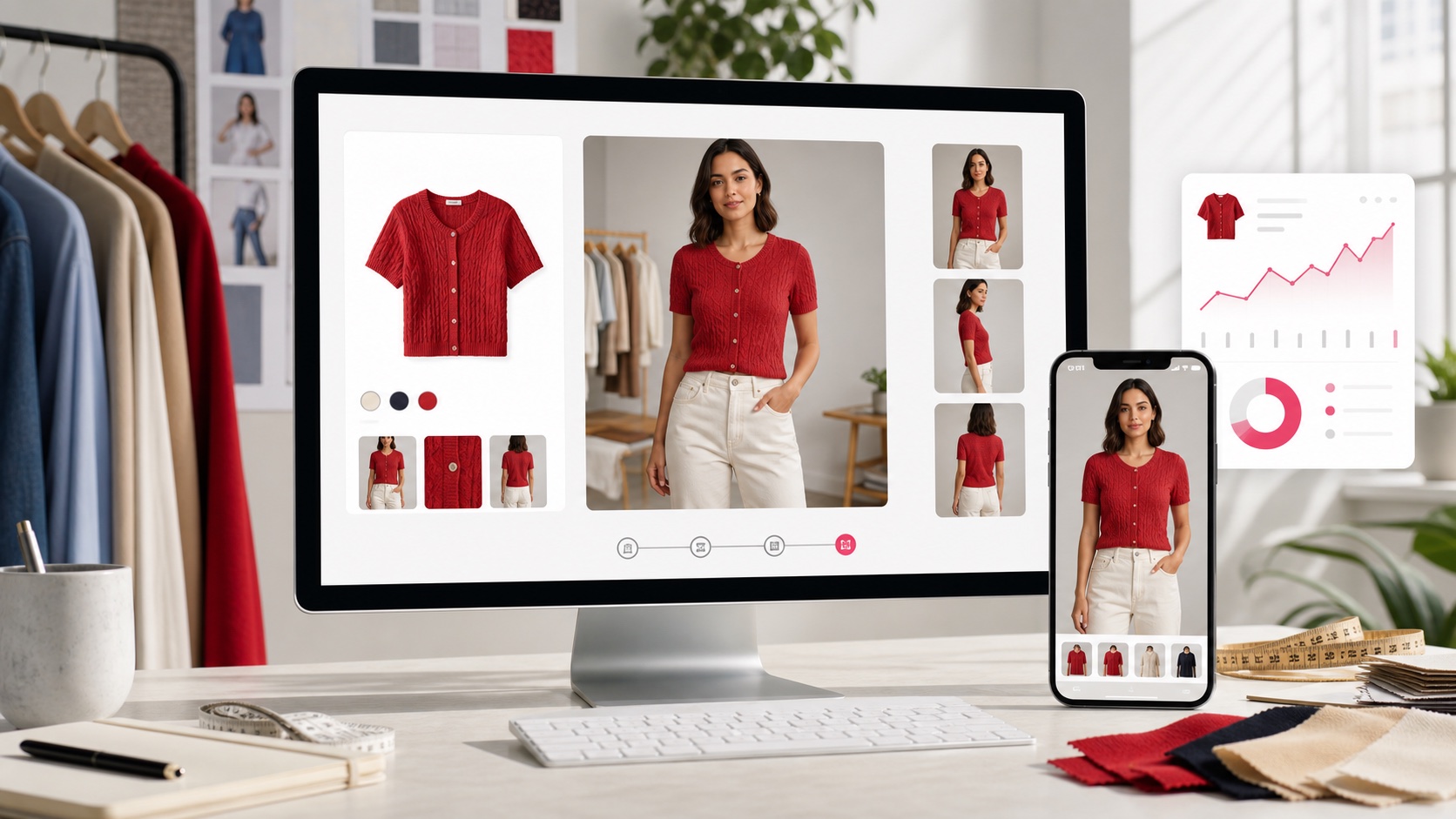
AI virtual try-on is moving from novelty to shopping infrastructure. When Google Shopping lets people try clothes on with their own photo, the message to fashion ecommerce teams is clear: shoppers expect fit confidence earlier, closer to product discovery, and inside the buying flow.
Try-on is moving into product discovery
At I/O 2025, Google announced AI Mode shopping features and a virtual try-on flow that works with a shopper's own photo. A shopper can browse apparel, tap a try it on button, upload a full-length image, and see how the item may look on them.
The important shift is not only the image generation. It is the placement. Try-on is no longer something a shopper discovers after they already trust the store. It can appear while they are still comparing products, styles, and brands.
Brand sites need to be readable by AI shoppers
McKinsey's 2026 fashion outlook frames AI shoppers and agentic commerce as a major change for brands. If old ecommerce work focused on search engine optimization, the next layer is making product and brand experiences understandable to AI assistants and shopping agents.
Virtual try-on helps with that because it ties together product photos, garment attributes, model context, shopper guidance, try-on outcomes, and conversion signals. A better-looking product page still matters, but structured fit confidence is becoming a stronger asset.
Product images are now AI inputs
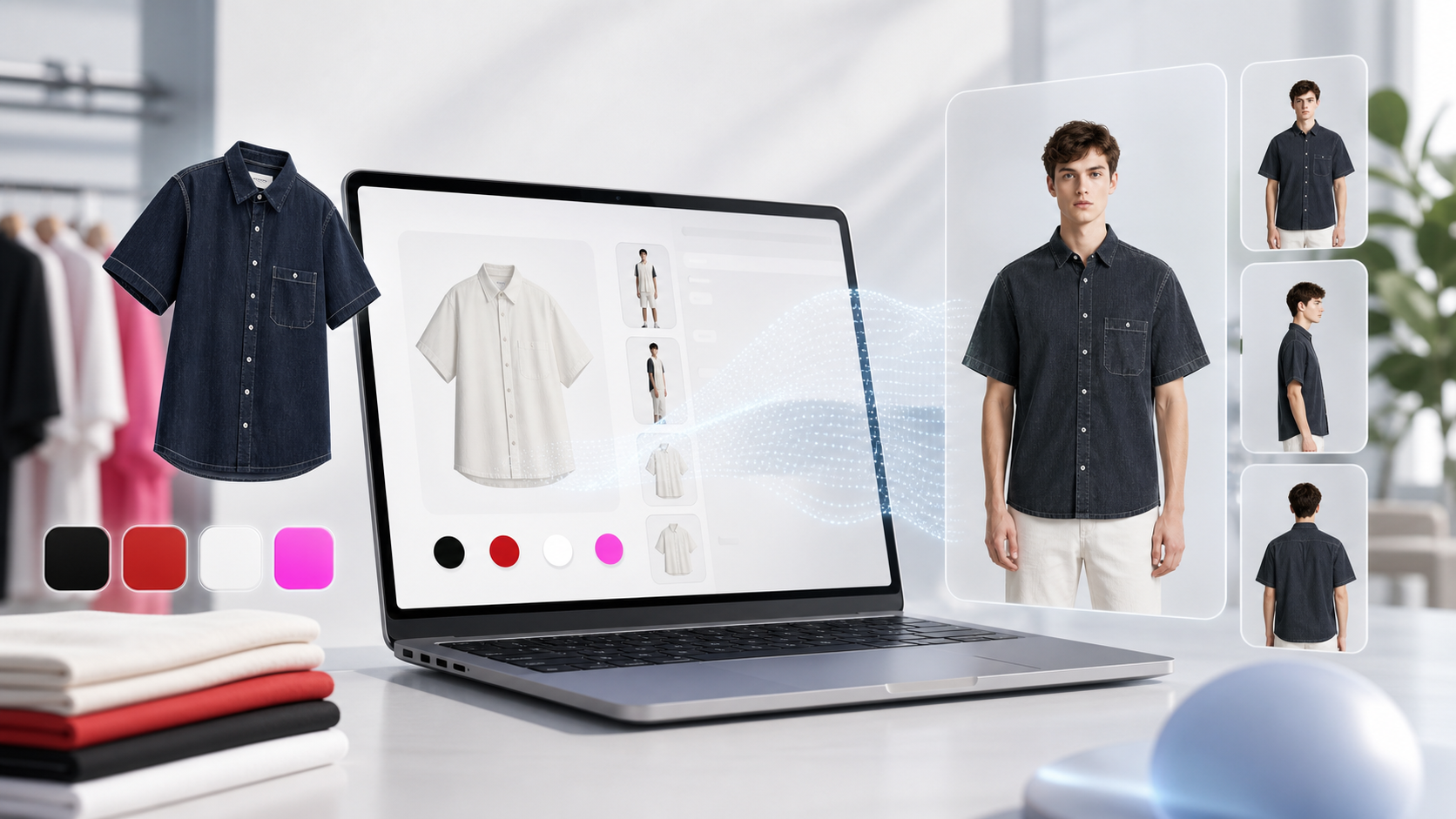
AI virtual try-on may look simple to the shopper, but the operating work starts with input quality. Google's own try-on help asks for good lighting, clean backgrounds, visible full-body photos, and fitted clothing. Product photos need the same discipline: clear garment edges, realistic color, and enough visual detail for a model to understand drape.
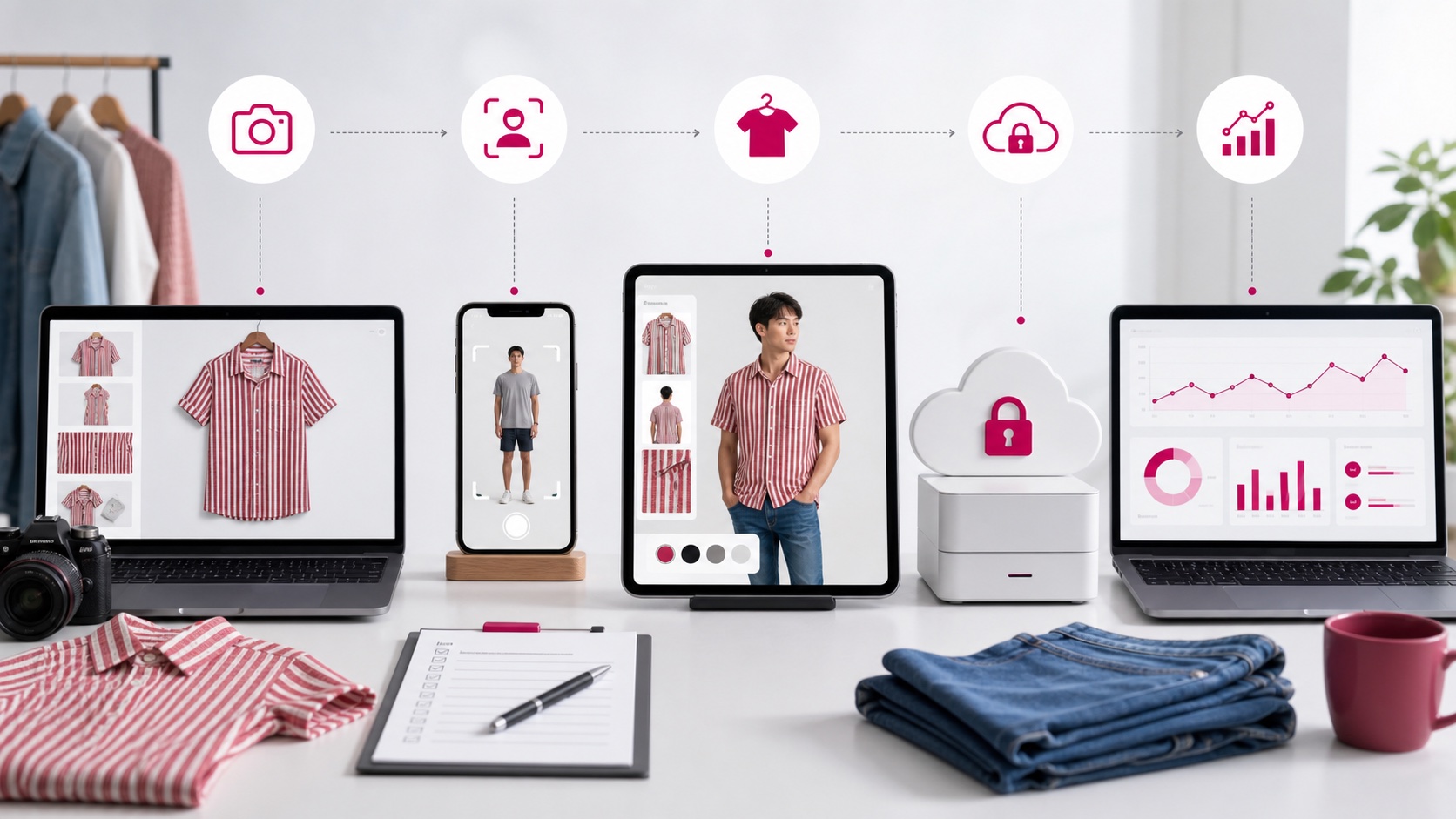
- Use product images with clean garment boundaries and minimal background noise.
- Prepare color variants with real texture instead of only flat color chips.
- Show shopper photo guidance before upload: full body, bright lighting, clean background, fitted clothing.
- Separate loading, failure, retry, and recent try-on states so the flow feels controlled.
Photo upload requires trust design
When a try-on feature asks for a shopper photo, performance claims are not enough. The page should explain what is uploaded, what is stored, how long it remains available, whether it is used for training, and how deletion works. Google Help gives photo use and deletion controls their own section for a reason.
The FTC has also warned that biometric information and machine-learning technologies can raise privacy, data security, bias, and discrimination concerns. For ecommerce teams, the practical response is clear copy at the moment of upload, conservative defaults, and a data flow your support team can explain.
Start narrow, measure early
A store does not need to launch AI fitting across every product on day one. Start with categories that drive size questions, high returns, or low model-photo coverage. Then measure the journey before calling the feature successful.
- Virtual try-on button click rate on product detail pages
- Try-on request to completed result rate
- Failure rate caused by product image or shopper photo quality
- Cart, checkout, and support-message differences between shoppers who used try-on and those who did not
- Changes in size exchange and return reasons for try-on-enabled products
AI virtual try-on is not just image generation. It is shopping UX for product discovery, fit confidence, and measurable buying intent.
Sources
- Google, Shop with AI Mode and virtual try-on updates from I/O 2025 Google Shopping announcement for own-photo virtual try-on
- Google Shopping Help, How the Google try-on tool works Country availability, photo requirements, uploaded image use, and deletion controls
- NRF and Happy Returns, 2025 Retail Returns Landscape 2025 online return rate context
- McKinsey, What to expect in the global fashion industry in 2026 AI shopper, agentic commerce, and generative engine optimization context
- Federal Trade Commission, Misuses of biometric information and harm to consumers Privacy and security risks around biometric information and machine-learning technologies
Related articles
 Returns & conversion
How to Reduce Apparel Returns: Start With Size and Fit Uncertainty
Apparel returns often start before checkout. Learn how product imagery, model photos, AI virtual try-on, and clearer buying flows can reduce size and fit uncertainty.
 Virtual try-on
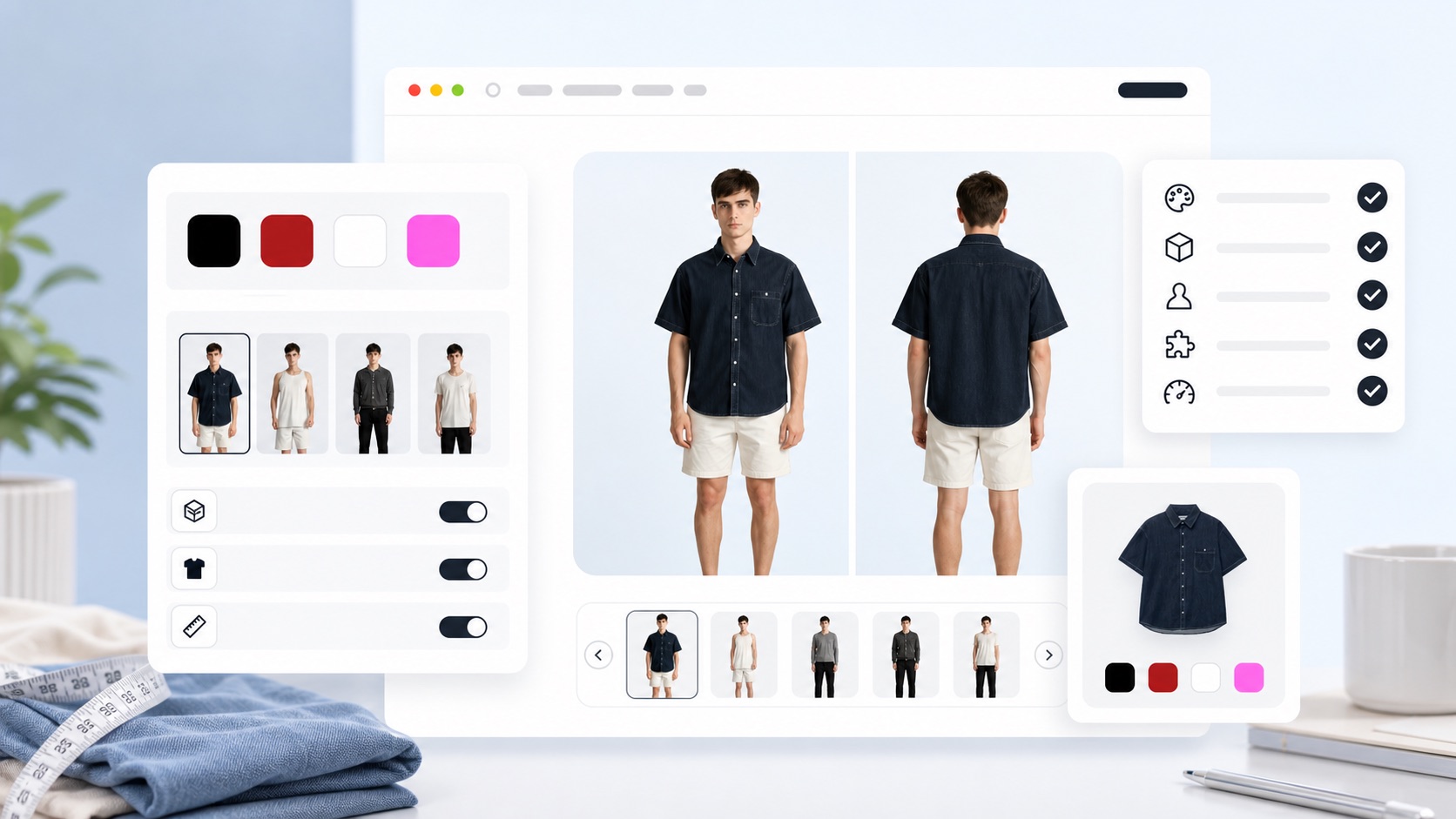
Virtual Try-On Software Checklist for Fashion Ecommerce
Compare virtual try-on software for fashion ecommerce by checking product images, model controls, branding, product-page integration, speed, privacy, and analytics.
 Virtual try-on
What Is Virtual Try-On? A Fashion Ecommerce Guide
Virtual try-on helps shoppers see how clothing may look before checkout. Learn why fashion ecommerce teams use virtual try-on software, AI fitting, and online fitting rooms.
See AI virtual try-on inside a product-page flow
Open the ThatzFit demo to review model selection, product fitting, and recent try-on history together.